Japan stocks2026-09-30 00:08:14Japan and South Korea stocks opened higher on Sept. 30Japanese and South Korean equities both opened in positive territory on Wednesday, Sept. 30, according to data cited by Odaily from Gate. Japan’s Nikkei 225 Index rose 600.53 points at the open, up 0.92%, to 66,081.80. South Korea’s KOSPI Index also moved higher, gaining 79.51 points, or 1.16%, to open at 6,950.32. The figures were published in an Odaily newsflash and attributed to Gate data. No additional market context or drivers were provided in the source item. The update was categorized as a 7x24 news brief.190
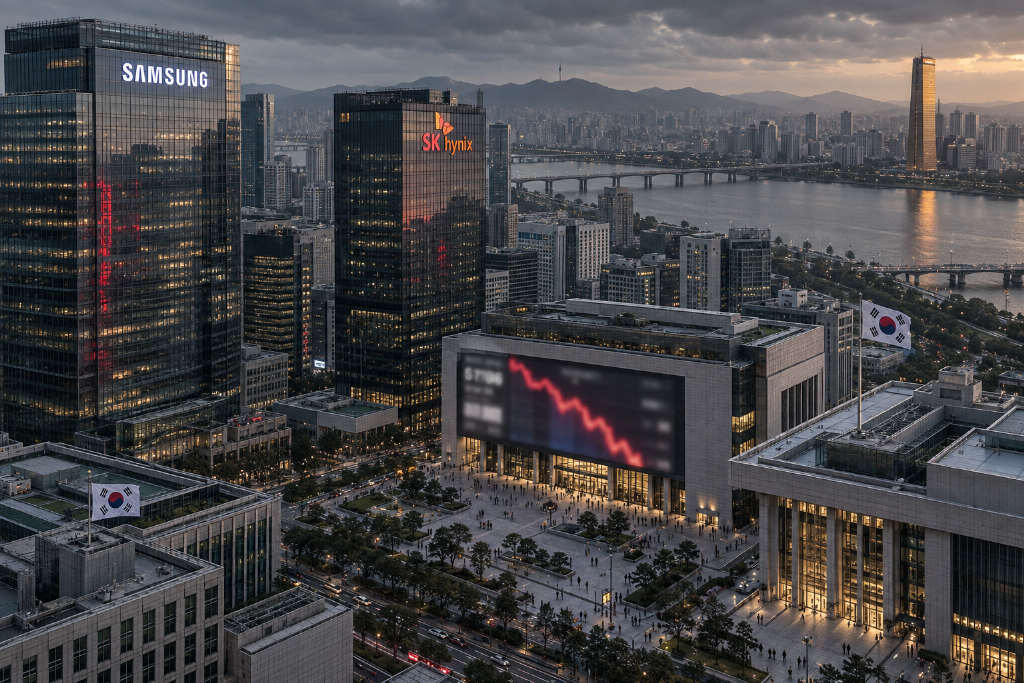
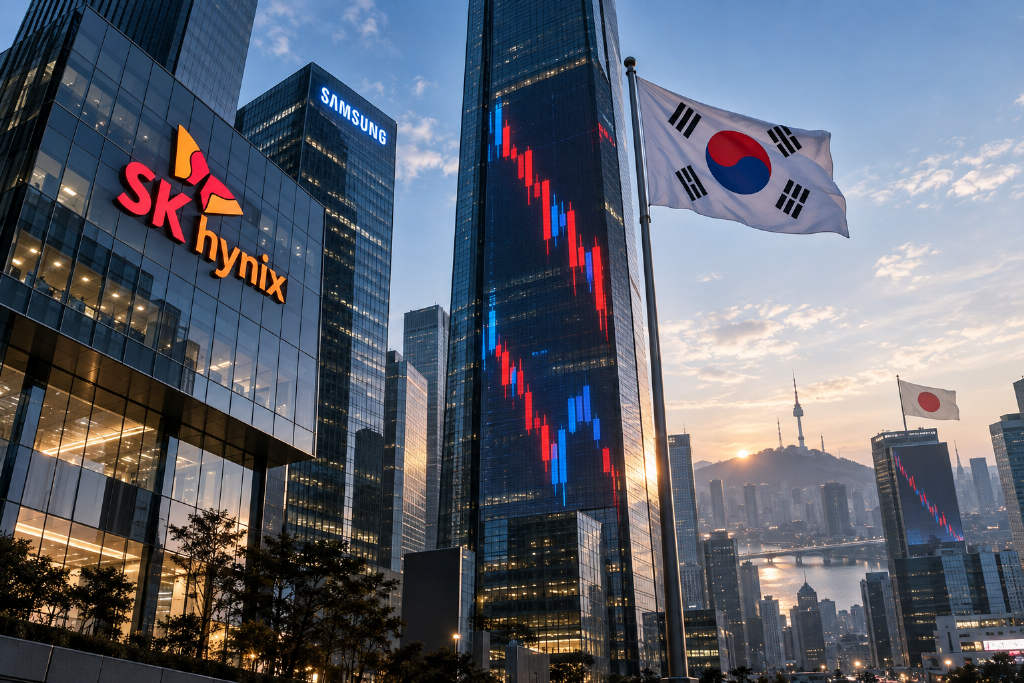
South Korea s2026-09-28 06:32:41South Korea’s KOSPI closes down 2.7% as Samsung Electronics and SK Hynix fall more than 5%South Korea’s benchmark KOSPI index closed lower on Sept. 28, falling 191.17 points, or 2.7%, to 6,889.75, according to a newsflash published by Odaily. The move marked a broad decline in the local equity market at the close of trading. Among major stocks, Samsung Electronics and SK Hynix both dropped more than 5%. The brief update did not provide additional drivers behind the sell-off, and no further company-specific details were disclosed in the source material. The item was categorized as a 7x24 newsflash and published by Odaily on Sept. 28. The source provided the closing level of the KOSPI, the point decline, the percentage drop, and the moves in the two chipmakers.260
South Korea s2026-09-22 00:02:04KOSPI Opens 2.20% Higher, Samsung Electronics and SK Hynix GainSouth Korea’s stock market opened higher on Sept. 22, with the KOSPI index up 2.20% in early trading, according to Bitget market data cited by BlockBeats. Among major stocks, Samsung Electronics rose 3%, while SK Hynix gained 2%. The update was published as a market brief and focused on the opening move in Korean equities and the early performance of the two chip-related names. No additional market context or broader sector data was provided in the source.320
Policy Regula2026-09-15 12:34:22Week 37 stocks review: CPI, oil and Oracle’s AI numbers raised the bar for September ratesThe shortened U.S. trading week of Sept. 7-13, 2026 ended with lower equity benchmarks even after a Friday rebound, as investors weighed sticky inflation, surging oil prices and a fresh read on AI spending from Oracle. The S&P 500 fell 0.8% for the week, the Dow Jones Industrial Average lost 1.6%, and the Nasdaq Composite slipped 0.7%, with the S&P 500 closing at 7,656.98. Oracle’s fiscal first-quarter report stood out as the clearest company-level AI signal of the week: revenue rose 30% to $19.35 billion, cloud revenue climbed 62% to $11.6 billion, and cloud infrastructure revenue jumped 121% to $7.4 billion. Still, that strength did not offset a market repricing driven by August U.S. PPI and CPI data, crude oil moving above $100 a barrel, and sizeable equity fund outflows. Pressure was not limited to the U.S. South Korea’s KOSPI fell below 7,000 on Sept. 11, closing at 6,909.91 after a 1.76% drop, while Hong Kong equities also finished the week lower near 24,806. In mainland China, August CPI rose 0.8% year over year and PPI increased 3.8%, though the report pointed to energy-driven price pressure rather than a clearly verified recovery in household demand. Markets now turn to the Sept. 15-16 Federal Open Market Committee meeting, follow-up moves by other central banks, and whether Oracle’s AI demand signal can spread without another jump in yields or oil.810
South Korea s2026-09-14 10:16:13Korea Exchange launches after-hours stock trading, extends dealing to 8 p.m.The Korea Exchange has formally launched after-hours trading for stocks, allowing investors to continue trading after the regular market closes. Under the new arrangement, standard trading hours remain unchanged at 9 a.m. to 3:30 p.m., while an added post-close session now runs until 8 p.m. local time. The exchange also said its planned pre-market session, which had been scheduled to go live the same day, has been postponed to the end of 2027. The delay came after the securities industry raised concerns over the burden of IT system development and staffing requirements. On another closely watched issue, the Korea Exchange said exchange-traded funds, or ETFs, and exchange-traded notes, or ETNs, will not be included in after-hours trading for now. The exchange cited concerns about market volatility in explaining that decision. The update was carried by Odaily, citing CCTV Finance.920
Japan stocks2026-09-11 06:40:34Japanese and South Korean stocks close lower, with KOSPI down 1.76%Japanese and South Korean equities both finished lower on Sept. 11, according to market data cited by Bitget. Japan’s Nikkei 225 index fell 1.93% to close at 64,011.34, while South Korea’s KOSPI index dropped 1.76% to 6,909.92. Among heavyweight names, SK Hynix declined 2.21% and Samsung fell 3.53%. The move reflected a broad pullback across the two markets in the latest session, with the cited benchmarks and major component stocks all ending the day in negative territory.800
South Korea s2026-09-10 00:06:09Korean stocks open slightly higher as SK Hynix gains 1%, Samsung Electronics slipsSouth Korean equities opened with modest gains on Sept. 10, according to Bitget market data. The KOSPI index rose 0.06% at the open to 7055.77. Among major names, SK Hynix advanced 1%, while Samsung Electronics edged lower. In Japan, the Nikkei 225 moved in the opposite direction, opening down 0.59% at 64755.71. The figures reflect early trading moves across two closely watched Asian equity benchmarks and their heavyweight technology components. No additional market drivers were provided in the source report.700
Japan stocks2026-09-02 06:32:44Japan, South Korea Stocks Slump as KOSPI Drops 3.99%Japanese and South Korean stocks closed sharply lower on Wednesday. According to Gate data, the Nikkei 225 fell 1,889.70 points, or 2.85%, to finish at 64,325.64. South Korea's KOSPI dropped 273.08 points, or 3.99%, to 6,562.72. In individual trading, SK Hynix declined 4.7% and Samsung Electronics was down about 4%.980